
Allah Malik Ek
God is the only One Almighty Master of all souls. Baba taught the values of total surrender to the Almighty Master - THE ONLY ONE - and experiencing His grace.
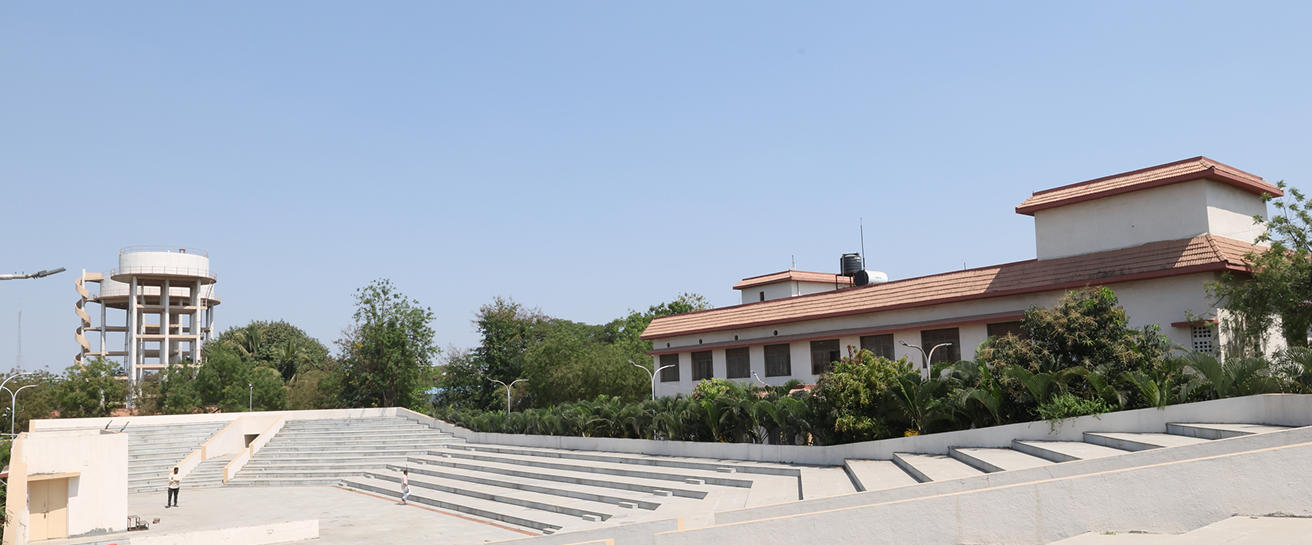
Explore the life, teachings, and legacy of Shri Sai Baba through time, stories, and sacred artifacts.
The extracts in this anthology are taken from Shri Sai Satcharitra
The extracts in this anthology are taken from Shri Sai Satcharitra
Shri Sai Baba is revered as one of the greatest saints ever seen in India, endowed with unprecedented powers, and is worshipped as a God incarnate. (SAI meaning Sakshat Ishwar – GOD THE ABSOLUTE)
This mysterious Fakir first made his appearance in Shirdi as a youth and remained there throughout his long life. He transformed the lives of those who met him and continuously is doing so even after his Samadhi in 1918 for those whose hearts are touched by his love and who pray and call him at any emergency in life for his blessings.
Baba stated that his mission is to "Give Blessings" without discrimination to all, and he proves it in myriad ways by healing the sick, saving lives, protecting the vulnerable, averting accidents, granting offspring, facilitating financial gain, bringing people into harmony within themselves and with each other and, above all, in effecting the spiritual evolution and transformation of those who came to him as the last resort.
Baba is, as one of his contemporary devotees put it, "The embodiment of the Supreme Spirit lighting the sadhaka's (seekers) path by His every word and action".
To his devotees, Baba is nothing less than a GOD. This has been a matter of experience and not imaginary.
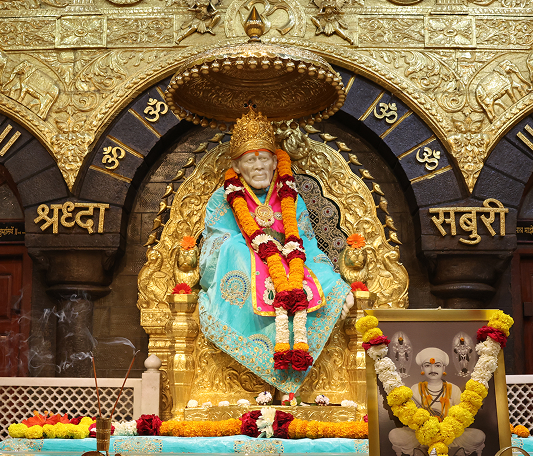
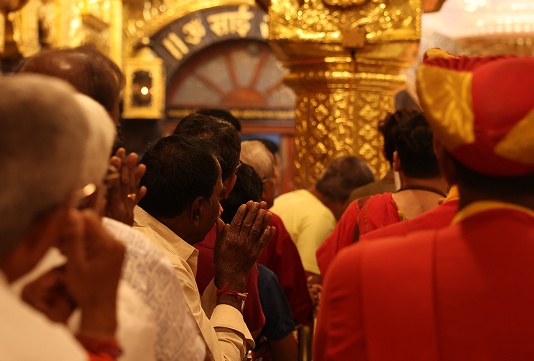
"I look at all with an equal eye"
An outstanding aspect of Sai Baba is that he is beyond distinctions of religion, caste or creed. He embodied all religions and preached the Universal religion of Love.
Devotees of all faiths find their meeting point in the Sai and people from all communities and all walks of life are united by the great love and reverence Baba inspires in them.
People today flock Shirdi in ever-increasing numbers to pay homage to the Divine and to experience the truth of Baba's promise that He would be active in answering devotees' prayers even from his tomb.
Baba said that he was a slave in the service of those who loved him that he was ever living to help those who turn to him and that he has to take care of his children day and night. He then taught the values of total surrender to the Almighty Master (ALLAH MALIK EK). The only ONE and experience his grace.
The mysterious beginnings of a saint
Nobody knew the parents, birth or birthplace of Sai Baba. Many inquiries were made, many questions were put to Baba and others regarding these details, but no convincing answer or information has yet been obtained. Practically we know nothing about these matters. When asked about his relatives and other details he gave only one answer: "From very long".
He first manifested himself as a young lad of sixteen under a Neem tree in Shirdi for the sake of Bhaktas. Even then he seemed to be full with the knowledge of a Brahman (the only one Universal force or energy governing all matters). He had no desire for worldly objects and pleasures even in dream.
He renounced Maya (delusion) and Mukti (deliverance) was at his feet. With his blessings many souls attained liberation. For all the seekers he uttered only three words "ALLAH ACHCHA KAREGA" by way of his blessings. Everything will be fine by the GRACE OF GOD.
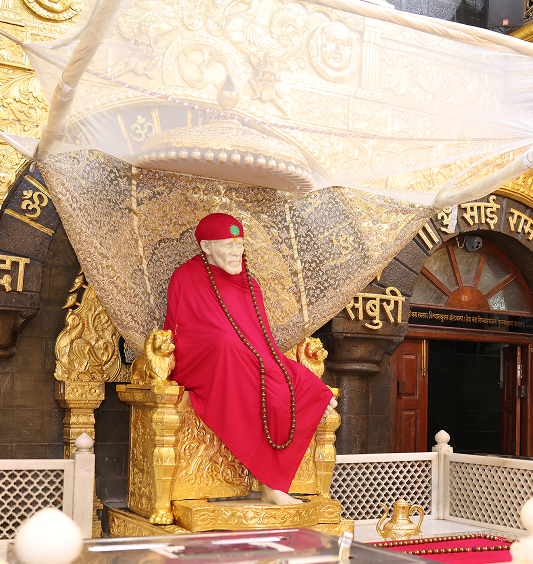
Teachings that transcend boundaries
Sai Baba's Mission and Advice
Saint Ramadas (1608–1681) flourished in the 17th century and fulfilled to a great extent his mission of protecting the helpless cows and Brahmins against the Yavanas powerful (Mohammedans or Followers of Islam), but within two centuries after him, the split between the two communities – Hindus and Mohammedans widened again, and it is believed that Sai Baba came to bridge the gulf.
His constant advice to all was to this effect. God is the only One Almighty Master of all souls and never discriminates while showering his Love on the souls who are all equals before him.
Sai Baba opposed all persecution based on religion or caste. He was a perfect incarnation of spiritual harmony and embodied the universal religion of Love that transcends all boundaries.
God is the only One Almighty Master of all souls. Baba taught the values of total surrender to the Almighty Master - THE ONLY ONE - and experiencing His grace.
Sai Baba embodied all religions and preached the Universal religion of Love, bringing together devotees of all faiths in unity and reverence.
He bridged the gap between Hindu and Muslim communities, living his life as a testament that all paths lead to the same divine truth.
Sai Baba as Satguru
There are many so-called Gurus (imposters) who go about from house to house with cymbals and veena in their hands, and make a show of their spirituality. They blow mantras into the ears of their disciples and extract money from them. They profess to teach piety and religion to their disciples, but are themselves impious and irreligious.
Sai Baba never thought of making the least show of his worth (piety). Body-consciousness, he had none, but he had great love for the disciples.
He taught through his own example, living a life of complete humility and service. His methods of teaching were unique and tailored to each individual disciple, communicating deep spiritual truths through simple actions and everyday incidents.
Sai Baba as a Yogi – Satchidanand Satguru
Sai Baba knew all yogic practices. He was well versed in the six processes, including Dhauti, Khandayoga and Samadhi, etc. He demonstrated his mastery over yogic exercises many a times.
Yet, if you think that he was a Hindu, he looked like a Yavan. If you think him to be a Yavan, he looked like a pious Hindu. Definitely no one knew whether he was a Hindu or a Mohammedan.
This mysterious quality of his incarnation embodied the essence of unity across all religious boundaries. He lived in a mosque which he called Dwarakamayi, yet practiced Hindu rituals. He wore the attire of a Muslim fakir, yet his teachings drew equally from Hindu scriptures and Islamic texts.
His life was marked by numerous miraculous events and demonstrations of supernatural powers, yet he himself remained humble and discouraged people from being attracted merely to these manifestations. His real miracle was the transformation he brought about in the lives of people who came to him.
The wonderful incarnation that was Sai Baba transcended all human categories and classifications. He was a perfect embodiment of Satchidanand - Truth, Consciousness, and Bliss - manifested in human form to guide seekers on the path to divine realization.
The sacred ash and its significance
Udi is the sacred ash that Sai Baba used to give to his devotees. It was prepared from the sacred fire (dhuni) that Sai Baba kept burning continuously in the Dwarakamayi mosque where he lived.
Sai Baba would regularly tend to this sacred fire, and the ash produced from it was considered to be very powerful and sacred. He would apply this Udi to the foreheads of devotees and also give it to them to take home.
The Udi was not just ordinary ash but was believed to be charged with Sai Baba's divine energy and blessings. Devotees reported miraculous healings and protection through the application and consumption of this sacred ash.
The Udi symbolizes the burning away of ego and desires, just as the sacred fire burns everything to ash. It reminds devotees of the impermanence of the material world and the importance of spiritual purification.
Even today, Udi from Shirdi is sent to devotees worldwide and is applied during prayers and aartis. It is considered a prasad (blessed offering) from Sai Baba himself, carrying his divine grace and protection.
The unique nature and characteristics of Sai Baba
Nature and Personality
Sai Baba's personality was a unique blend of simplicity, compassion, and divine authority. He was known for his penetrating gaze that could see into the hearts of people and his ability to understand their deepest thoughts and needs without being told.
He was approachable to all, regardless of their social status, religion, or background. Rich and poor, learned and illiterate, saints and sinners - all were treated with equal love and respect. His compassion was boundless, and he would often go out of his way to help those in need.
Despite his supernatural powers and divine nature, Sai Baba lived a life of utmost simplicity. He possessed nothing and lived on alms (biksha) that he collected daily from a few houses in Shirdi. Whatever he received, he would distribute among the poor and keep almost nothing for himself.
He had a mysterious way of teaching. Sometimes he would be extremely loving and gentle, and at other times he would appear harsh and angry. But devotees understood that both aspects were manifestations of his divine love, meant to guide them on the spiritual path according to their individual needs.
Dress & Routine
Sai Baba wore a simple long white robe (kafni) and a cloth cap. He would tie a cloth around his head and wore minimal clothing despite the varying weather conditions. His appearance was that of a Muslim fakir, though his teachings and practices incorporated both Hindu and Islamic elements.
His daily routine was fairly consistent. He would wake up early in the morning, tend to the sacred fire (dhuni), and then go for his rounds of collecting alms (madhukari). He would visit only a few selected houses to collect food, which he would then distribute among his followers, keeping very little for himself.
Throughout the day, he would sit in the mosque or under the neem tree, receiving devotees, answering their questions, and solving their problems. He would often grind wheat in a hand mill, which was later understood to symbolize the grinding away of devotees' karma.
In the evenings, devotees would gather for the lighting of lamps and singing of devotional songs. Sai Baba himself would often join in the singing or sit in silent meditation. He would retire late at night, often spending the night in meditation or in conversation with close devotees.
Teaching Style
Sai Baba's teaching style was highly unconventional and uniquely tailored to each individual. He rarely gave formal sermons or discourses. Instead, he taught through his own example, through parables drawn from everyday life, and through seemingly casual conversations.
He had an extraordinary ability to understand the spiritual level and needs of each devotee. To some, he would speak in plain terms; to others, in riddles and paradoxes that required contemplation to understand. He would often communicate deep spiritual truths through simple stories about ordinary people and everyday situations.
Many of his teachings were imparted through actions rather than words. For instance, his daily practice of collecting alms taught humility and the dissolution of ego. His distribution of whatever he received taught detachment and charity. His maintenance of the sacred fire taught the importance of constant spiritual practice.
He was known to test his devotees in various ways - sometimes through apparent neglect, sometimes through harsh words, and sometimes through impossible-seeming demands. These tests were designed to strengthen their faith and help them overcome their limitations and ego.
Despite his simple lifestyle and informal teaching methods, Sai Baba demonstrated profound knowledge of Hindu scriptures, Muslim texts, and spiritual practices from various traditions. He could quote from the Bhagavad Gita, the Quran, and other sacred texts with equal ease, showing that he had mastered the essence of all religions.
Sacred objects that touched the saint's life
Sai Baba lived a life of extreme simplicity and possessed very few personal items. The objects he used have become sacred relics, carefully preserved and venerated by devotees. Each item tells a story and carries spiritual significance.
Sai Baba maintained a perpetual sacred fire in the chulli. The fire's udi (sacred ash) was distributed to devotees as prasad, symbolizing the burning of desires and spiritual enlightenment.
Sai Baba used a hand-operated grinding mill to grind wheat, which he distributed to devotees. Symbolically, this represented the grinding away of sins and karmas, with ladies assisting and receiving spiritual teachings.
This simple lota, or water pot, was used daily by Sai Baba. It embodies his humility, showing the spiritual value of a simple life.
Sai Baba often carried a simple cloth bag, or Jata, containing food or small items. It symbolizes minimal possessions and non-attachment to material wealth on a spiritual path.
This sacred space features the udi stand, holding blessed ash, and the kathada, Baba's simple wooden seat. Together, they symbolize blessings and his dedication to simplicity.
Sai Baba regularly used this stone for bathing, maintaining cleanliness. Revered by devotees, it symbolizes the importance of hygiene alongside spiritual purity.
The Udi stone and ota were used to prepare the sacred ash. This process symbolizes the transformation of the material into the spiritual.
Baba's wooden satka, or walking stick, symbolizes spiritual support and guidance. Like a guru's staff, it represents authority and direction on life's journey.
These copper lotas were used by Sai Baba for storing water. Their preservation highlights how ordinary items become sacred when associated with a saint.
Key events in the life of Sai Baba
A timeline of significant events in the life and legacy of Shirdi Sai Baba, documenting his journey from a mysterious young ascetic to one of India's most revered spiritual masters.
