Places around Shirdi
Discover sacred destinations, heritage landmarks and places of spiritual significance around Shirdi.
Explore Beyond Shirdi
Devotees visiting Shirdi may choose to extend their journey to explore several sacred, cultural and historic destinations located across Maharashtra. The region surrounding Shirdi is home to Jyotirlingas, ancient temples, UNESCO-listed cave complexes and the shrines of revered saints whose lives and teachings have shaped devotional life across the subcontinent.
From the Jyotirlinga at Trimbakeshwar to the rock-cut wonders of Ellora, from the samadhi of Saint Dnyaneshwar at Alandi to the sacred bathing ghat at Ramkund — each destination carries its own spiritual significance and offers a quiet complement to one's pilgrimage to Shirdi.
NEAR SHIRDI
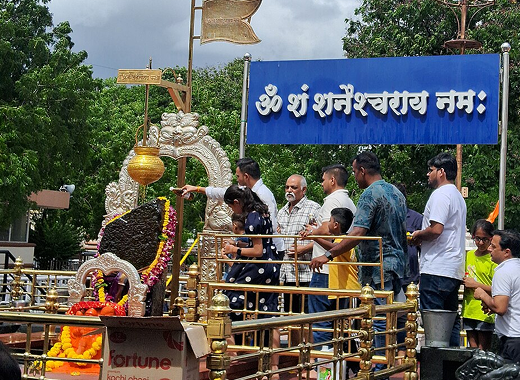
Shani Shingnapur
Nevasa, Ahilyanagar · approx. 50 km from Shirdi via Rahuri
Shani Shingnapur is one of the most revered shrines dedicated to Shani Dev in India. The deity is worshipped here as a self-manifested black stone under the open sky, without a roof or enclosing structure. Devotees believe that Shani Dev protects all residents and visitors, and the village is known for its tradition of homes without doors.
Places Around Shirdi
Explore important spiritual, cultural and heritage destinations that can be visited during your journey to Shirdi.
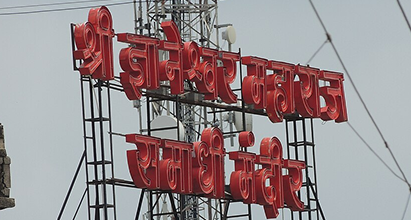
Pune & Beyond
Alandi
Khed taluka, Pune · on the banks of the Indrayani River
Known as Devachi Alandi, this is the samadhi of saint-poet Dnyaneshwar, who took samadhi here at the age of twenty-one. Annual Ashadhi and Kartiki Ekadashi fairs draw large gatherings of Varkari devotees. A Sai Mandir has also been established here.
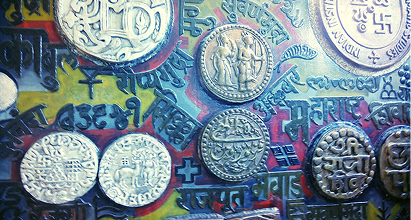
Nashik
Coin Museum
Anjaneri Village (near Anjani Hill), Nashik
Established in 1980, the Indian Institute of Research in Numismatic Studies is considered the only institution of its kind in Asia. It documents the history of coinage from ancient India through successive dynasties.
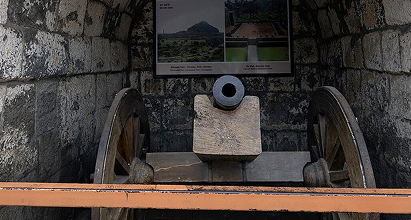
Chhatrapati Sambhajinagar
Daulatabad Fort
Chhatrapati Sambhajinagar
A formidable medieval fort rising over 600 feet above the Deccan plain. Originally called Devgiri (a Yadava stronghold), renamed by Mohammed bin Tughlak in the 13th century. Features include the Chand Minar, Jami Masjid and royal palaces.
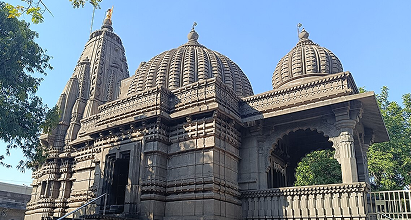
Nashik
Kalaram Temple
Panchavati, Nashik
Built in 1794 by Gopikabai Peshawa and standing 70 feet tall, this temple is constructed from black stone quarried from Ramsej Hill. Nearby temples of Vithal, Ganapati and Maruti complete the Panchavati complex.
Nashik
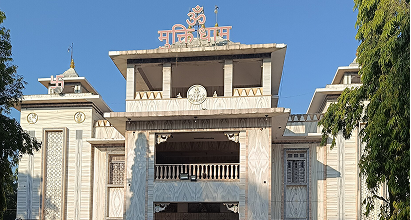
Muktidham
Nashik · approx. 2 km from Nashik Road Station
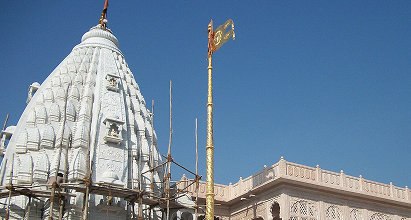
A white Makrana marble temple where all eighteen chapters of the Bhagavad Gita are inscribed on the walls. Replicas of the twelve Jyotirlingas of India are enshrined within the complex.
Near Shirdi
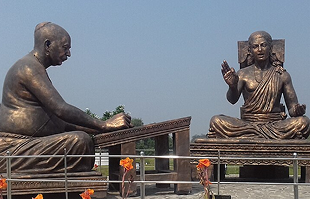
Nevasa
Nevasa tehsil, Ahilyanagar
The sacred town where Saint Dnyaneshwar composed the Dnyaneshwari, one of the most revered texts in the Marathi tradition. A pole marking the exact spot still stands. The Varkhedai (Mata Laxmi Temple) in nearby Varkhed draws pilgrims to a large fair on Chaitra Vadya Panchami.
Nashik
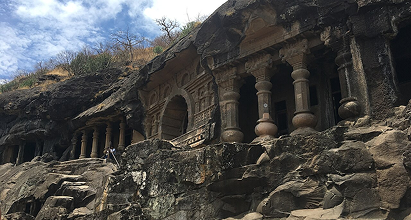
Pandavleni Caves
Trivashmi Hill, Nashik
A group of 24 rock-cut caves approximately 2,000 years old, carved into Trivashmi Hill by Jain kings. Associated with Tirthankara Vrishabdeo, Veer Manibhadraji and Ambikadevi.
Nashik
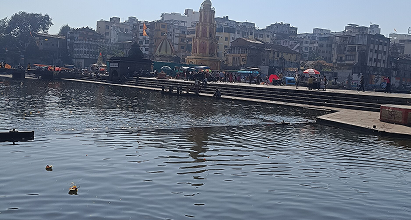
Ramkund
Panchavati, Nashik
A sacred bathing tank on the banks of the Godavari River, at the site where Lord Ramchandra is believed to have bathed during his fourteen-year exile. A principal site of the Kumbh Mela, held every twelve years.
Other
Shegaon
Khamgaon Tehsil, Buldana
The samadhi of Shri Gajanan Maharaj, revered across Maharashtra. Known as the Pandharpur of Vidarbha, Shegaon draws large Thursday gatherings. Annual fairs are held on Ram Navami and Rushi Panchami.
NASHIK · 36 KM FROM NASHIK
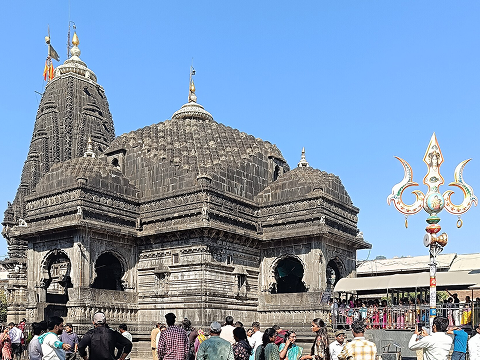
Trimbakeshwar
Trimbak, Nashik District
Trimbakeshwar is one of the twelve Jyotirlingas — the most sacred shrines of Lord Shiva in India. The Shivalinga enshrined here is distinctive: it bears three faces, representing Brahma, Vishnu and Shiva as the one supreme reality.
CHHATRAPATI SAMBHAJINAGAR · UNESCO WORLD HERITAGE SITE
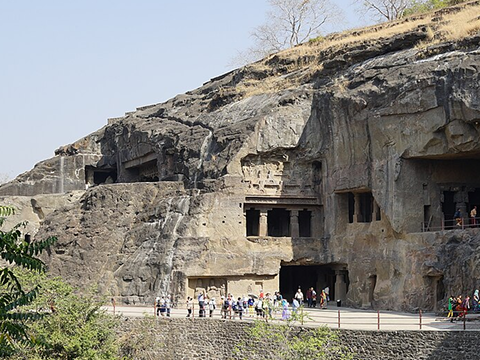
Ellora Caves
Chhatrapati Sambhajinagar
Ellora's 34 rock-cut caves represent one of the finest achievements of ancient Indian craftsmanship. Created between the 2nd century BCE and the 11th century CE, the caves contain temples, monasteries and viharas of Buddhist, Hindu and Jain traditions carved into a single volcanic escarpment.
The Kailasa Temple (Cave 16), carved as a monolithic structure from a single boulder, is among the most ambitious architectural undertakings of the ancient world. A visit to Ellora offers an unparalleled encounter with the devotional art and architecture of medieval India.
PUNE REGION · SAHYADRI HILLS
Bhimashankar
Khed, Pune
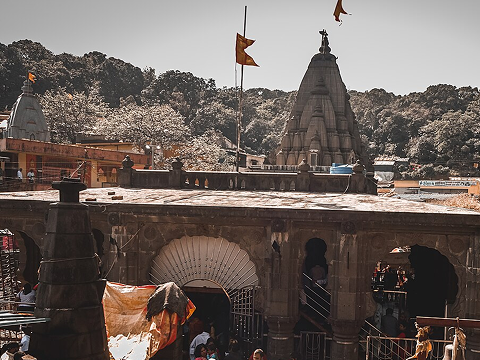
Bhimashankar is one of five Jyotirlingas in Maharashtra and one of the most serene. The temple sits deep within the Sahyadri range, surrounded by dense forest that forms part of a wildlife sanctuary. The Bhima River originates from the hills here.
The forest landscape and cool climate lend the pilgrimage a calm, contemplative quality. Devotees undertake the trek through the forest as an act of devotion, arriving at the temple after passing through the natural world that surrounds it.