The Temple Premises
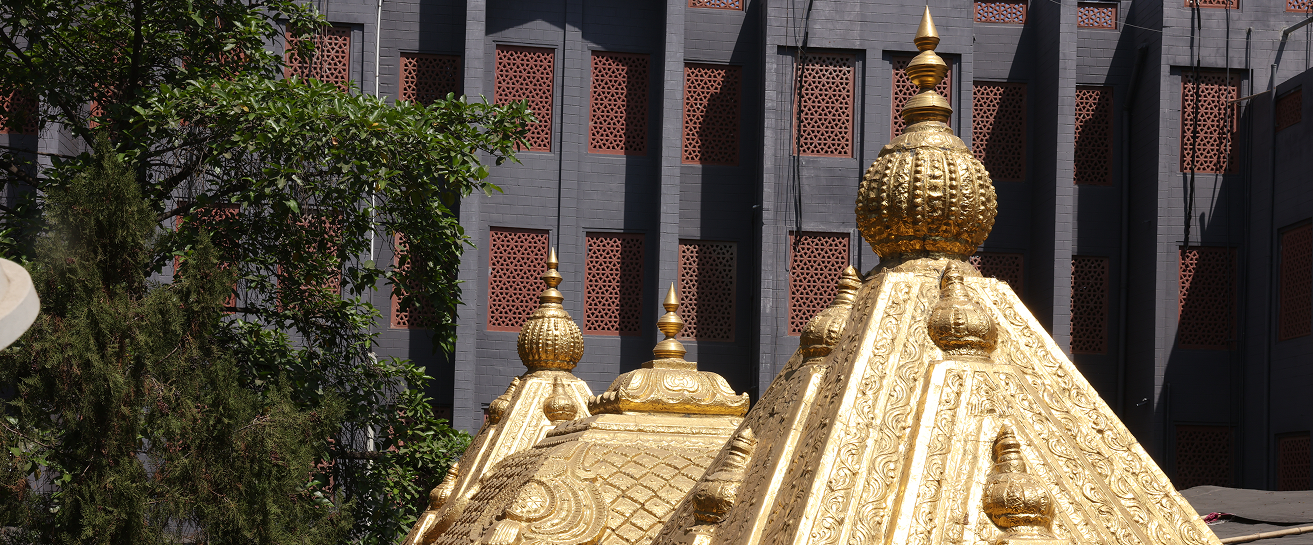
The sacred seat of the Guru — where Baba first appeared beneath the ancient neem tree
About Chavadi
The village assembly hall that became a place of sacred significance
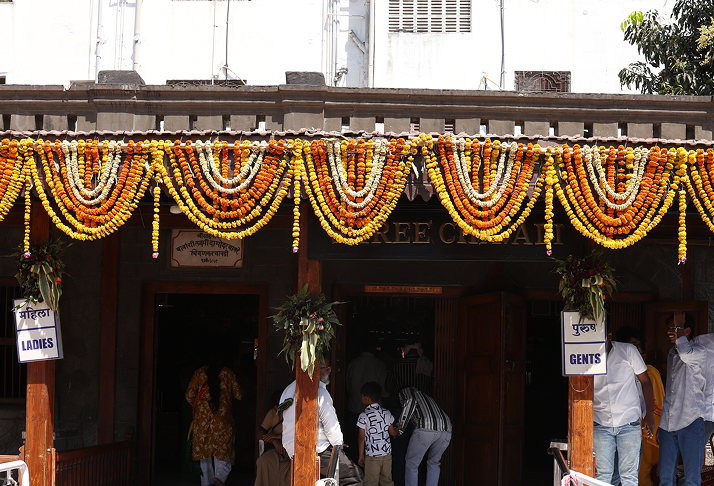
The word "Chavadi" refers to a traditional village assembly hall or public resting place — a structure found in many Indian villages that served as a communal space for meetings, rest, and public business. In Shirdi, the Chavadi was located a short distance from Dwarkamai, and it was here that Shri Sai Baba would sleep on alternate nights.
The tradition of Baba sleeping at Chavadi every other night developed gradually. In the early years of his life in Shirdi, Baba had no formal routine. But as his devotees grew in number and their attachment to him deepened, they developed the custom of accompanying Baba on his nocturnal journeys between Dwarkamai and Chavadi, transforming what had been a simple change of sleeping place into a great devotional procession.
Baba would sleep at Dwarkamai on one night, then at Chavadi the next night, alternating throughout his years in Shirdi. This pattern became so established that it structured the entire rhythm of devotional life in Shirdi. The night Baba went to Chavadi became the occasion for the great Chavadi Utsav — a procession of extraordinary beauty and devotion.
Baba's choice to sleep at Chavadi is seen as an act of grace towards the village as a whole — by resting in the public space, he spiritually blessed the entire community and its traditions of hospitality and communal gathering.
Chavadi and the Beginning of Arati
How the formal worship tradition of Arati was born at ChavadiThe tradition of formal Arati — the devotional rite of offering light, incense, and song before the divine — developed directly in connection with Chavadi. When Baba would arrive at Chavadi at night for his rest, his devotees naturally wished to honour him, and this wish gave rise to the practice of Sej Arati (the night Arati, performed when Baba was about to rest).Similarly, Kakad Arati — the early morning Arati performed to wake Baba — became a formal practice first associated with Chavadi mornings before extending to Dwarkamai. These two Aratis, born from the simple love of devotees who wanted to honour Baba's rest and waking, became the backbone of the full Arati schedule that continues at Shirdi today.It was at Chavadi that the formal, ceremonial aspects of devotion to Baba first took shape. Before the Chavadi Utsav tradition developed, devotion to Baba was more informal and individual. The regularity of the procession and the night-time Arati created a communal devotional rhythm that transformed Shirdi from a village with a remarkable resident saint into a place of organised, formal pilgrimage.
The Sej Arati
The Sej Arati (also written as Shej Arati) is performed late at night when Baba is honoured as he prepares for rest. The songs of the Sej Arati are among the most beautiful in the Shirdi devotional canon — tender, intimate songs that speak of the devotee watching over the beloved Baba as he sleeps, asking that his rest be peaceful and his dreams be sweet.
The song begins: "Aarti Sai Baba / Soukhyadata Jeevan..." and proceeds through verses that describe Baba's divine attributes and the devotee's complete surrender to his grace.
Renovation and Interior
The objects and artefacts preserved within Chavadi
The Chavadi was renovated by Anna Chinchanikar, a devoted follower of Baba who had the means and the dedication to undertake improvements to the structure. His renovation made Chavadi more suitable as a devotional space while retaining its character as a traditional village building.
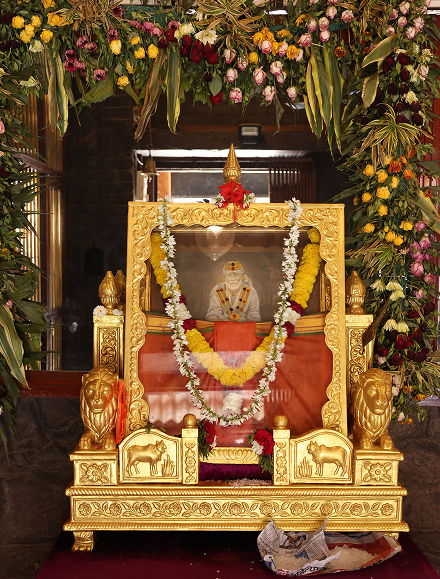
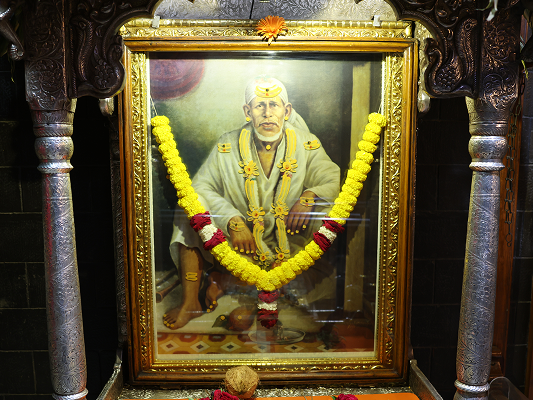
Within Chavadi, several sacred objects are preserved and displayed. A portrait of Shri Sai Baba is present, as well as the wooden bed on which Baba would rest during his nights there. In his later years, when Baba's physical condition had weakened, a wheelchair was used to assist him, and this wheelchair is also preserved within Chavadi as a testament to his later life.
A photograph showing Baba receiving Raj Upachar (royal honours) is displayed in Chavadi — one of the rare visual records of the kind of devotional ceremony that surrounded Baba in his physical lifetime. A silver throne is also kept in Chavadi, a gift from devoted followers that was used during ceremonial occasions.
Visitor Information
Chavadi is open to devotees for darshan. Please refer to current timings published by the Shree Saibaba Sansthan Trust for the latest visiting hours and conditions.
The Chavadi Procession — Utsav
The grand Thursday night procession from Dwarkamai to Chavadi
Origins of the Procession
The Chavadi Utsav — the great procession accompanying Baba from Dwarkamai to Chavadi — was not planned or designed. It evolved organically from the love of Baba's devotees. As his fame spread and his following grew, more and more people wanted to accompany him on his evening walk to Chavadi. What had been a simple walk became, by the power of collective devotion, a grand ceremonial procession.
Among the central figures in the procession were Tatya Kote Patil, who would walk beside Baba holding his hand, and Mahalsapati, who would carry an umbrella over Baba's head. Shyam Sunder, the horse, would also be part of the procession, decorated with flowers and led in honour before Baba.
The Procession in Baba's Time
The procession would begin at Dwarkamai after the conclusion of prayers there. Baba would emerge dressed for the occasion. Flags would be carried, incense would be burning, musicians would play, and devotees would sing bhajans and qawwalis. The crowd would surround Baba as he walked, some throwing flowers before his feet, others simply watching with tear-filled eyes.
Baba was characteristically ambivalent about such ceremonial worship. He was, at heart, indifferent to honour and did not seek to be worshipped. Yet he submitted to it out of his love for his devotees, understanding that for them, the act of honouring him was itself a spiritual practice — a way of opening their hearts to the divine.
The Sri Sai Satcharita, the authoritative devotional biography of Baba, describes the procession in detail, noting the songs that were sung, the order in which devotees walked, and the atmosphere of extraordinary grace that accompanied Baba's movement through the village streets.
Baba's Padukas (sandals), his satka (symbolic stick), and his photograph would be carried as part of the procession, along with a palanquin that was sometimes used when Baba's physical condition required it. At Chavadi, the Sej Arati would be performed, the atmosphere transformed into one of deep, late-night devotion, and Baba would retire for the night.