The Temple Premises
The sacred seat of the Guru — where Baba first appeared beneath the ancient neem tree
Temples of the Sacred Premises
Within and immediately around the Shirdi temple complex are several other temples and places of worship, each with its own history and sacred significance. Many of these temples were part of the devotional landscape that Baba himself inhabited — he visited them, was associated with them, and in some cases his connection to them forms part of the Shirdi devotional narrative. Together they make Shirdi not merely a site dedicated to one saint, but a sacred landscape of remarkable breadth and spiritual richness.
Hanuman (Maruti) Mandir
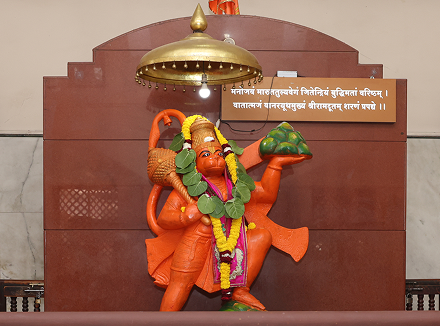
The Hanuman Mandir — also known as the Maruti Mandir — is one of the oldest temples in Shirdi. Situated between Dwarkamai and Chavadi, it faces south in the traditional south-facing orientation associated with temples of Hanuman and Dakshinamurti (Shiva as teacher, facing south). Its age and position make it one of the anchor points of Shirdi's sacred geography.
The temple contains historical Hanuman statues, some of considerable antiquity. Baba had a connection with this Mandir — he would sometimes visit it, and Shama (Madhav Rao Deshpande), one of Baba's most beloved devotees, is associated with the story of bringing Baba to prostrate before the Hanuman idol — an act of characteristic humility on Baba's part.
Devidas, a brahmachari (celibate spiritual aspirant), was at one time associated with this Mandir, living and meditating there. Javhar Ali, an Islamic faqir, also had a historical association with the area near the Mandir. Both figures appear in the early devotional history of Shirdi before Baba's fame had spread widely.
The temple was later renovated by the Sansthan, bringing it within the formal care and maintenance of the Trust while preserving its essential character and historical significance.
The Three Temples
Built by Tatya Kote Patil — dedicated to Ganesh, Shani, and Mahadev
Three temples — dedicated respectively to Ganesh, Shani, and Mahadev (Shiva) — were built through the initiative and resources of Tatya Kote Patil, one of the most intimate of Baba's companions in Shirdi. Tatya was a close friend and devoted follower, and his contribution to these temples reflects his desire to honour the broader devotional landscape of the village that Baba called home.
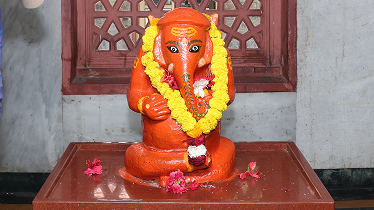
Ganesh Temple
The Ganesh temple honours the elephant-headed deity who is propitiated at the beginning of all undertakings as the remover of obstacles. Offering lamps (oil lamps) are lit here regularly by devotees. The temple was later enlarged to better accommodate the growing number of pilgrims to Shirdi.
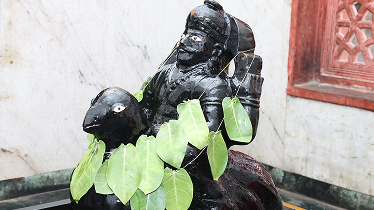
Shani Temple
The Shani temple is dedicated to the deity of Saturn — considered particularly powerful and feared in astrological tradition, yet propitiated for protection and the resolution of karmic difficulties. The offering of oil lamps before Shani is a traditional devotional practice widely observed here.
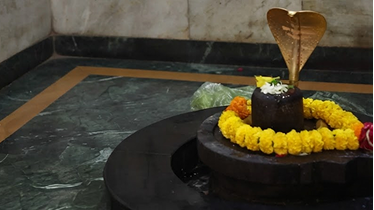
Mahadev Temple
The Mahadev (Shiva) temple is an important devotional centre within the complex. Near the Mahadev shrine is a tiger's Samadhi — a burial place for a tiger associated with Shirdi, a reminder of Baba's extraordinary rapport with animals and the special environment that his presence created.
Abdul Baba — Devoted Keeper of Lendi
Abdul Baba (Syed Falke) was a Muslim devotee who had come to Baba as a young man and devoted his entire life to his service. His particular role was the maintenance of the Lendi area and the care of the Nanda Deep lamp. He would sweep the paths, tend the plants, maintain the lamp, and accompany Baba on his daily visits with quiet, selfless dedication. Abdul Baba lived to an advanced age and remained at Shirdi in devoted service for decades.
The Neem and Bodhi Trees
The neem tree and Bodhi tree planted by Baba at Lendi are living memorials of his presence. As with the neem tree at Gurusthan, the neem tree at Lendi is venerated by devotees who believe that Baba's spiritual energy continues to emanate from it. The Bodhi tree stands as a silent reminder of the universality of Baba's teaching — that the divine is accessible through any sincere tradition, and that the trees planted in wisdom carry that wisdom forward through time.
Jain Temples
Two distinct Jain temples reflecting Shirdi's universal spiritual character
Jain Swethambara Temple
The Jain Swethambara Temple is located opposite Gate No. 1 of the Shirdi temple complex. It is maintained by the Sri Jain Swethambara Theertha Trust. A notable feature of the temple's construction is that it was built without the use of iron — following the Jain principle of non-violence which extends even to materials that might rust and harm the earth or creatures over time.
The principal deity of the Swethambara Temple is Adeshwar Bhagavan — the first of the Jain Tirthankaras (ford-makers or enlightened teachers). The temple serves the Jain community of devotees who come to Shirdi and provides a place of worship in their own tradition within the broader sacred complex.
Shish Mahal — Digambar Jain Temple
The second Jain temple in the Shirdi complex is known as the Shish Mahal — a name that refers to its extraordinary interior, which is decorated with an elaborate mosaic of mirrors. "Shish" means glass or mirror, and "Mahal" means palace — the Mirror Palace. The mirror-mosaic technique creates an interior of unusual visual beauty and spiritual atmosphere, with the reflected light creating a sense of luminous, multifaceted divine presence.
The Shish Mahal was associated with Sri Shantiniwas Maharaj and is managed by the Shri Shantniwas Digambar Temple Committee. It serves the Digambara Jain community and stands as a reminder that Shirdi's spiritual landscape is broad enough to embrace even the most architecturally distinctive forms of devotion.
The presence of two Jain temples within the Shirdi complex is a fitting expression of the spirit of Shri Sai Baba — who transcended all boundaries of religion and welcomed all traditions equally. The Jain community has maintained a devoted connection to Shirdi, and their temples here are among the most architecturally distinctive in the complex.
