Gurusthan new
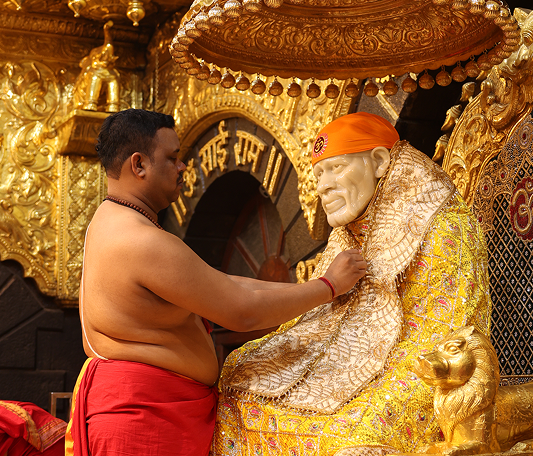
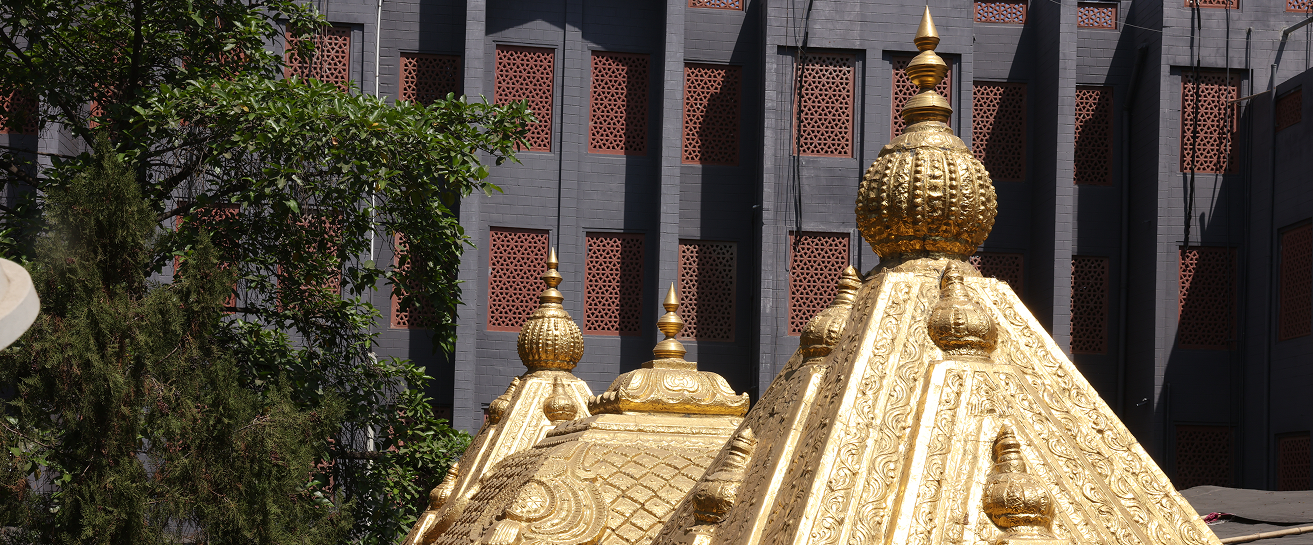
The sacred seat of the Guru — where Baba first appeared beneath the ancient neem tree
About Gurusthan test
The name "Gurusthan" means "place of the Guru." It is one of the most sacred spots in all of Shirdi, for it was here that Shri Sai Baba first appeared as a young lad of about sixteen years of age, seated beneath an ancient neem tree, deep in meditation. Villagers who encountered him were struck by his youth combined with his extraordinary spiritual composure. They found it impossible to believe that one so young could be so profoundly established in knowledge of Brahman.
Baba himself associated this spot with his own Guru. When devotees asked him about his Guru, he would point to Gurusthan and say that his Guru lived there. He identified this sacred neem tree and the ground beneath it with the spiritual lineage that had shaped him. To this day, the site is venerated as the ground where Baba's own inner life was rooted.
The place was originally on the outskirts of Shirdi village, surrounded by open fields and forest. The young Baba would sit beneath the neem tree in a state of deep absorption, sometimes for days at a time, drawing the wonder and reverence of those who saw him. His stillness, his indifference to bodily comfort, and the luminous quality of his presence marked him from the very beginning as no ordinary person.
The Sacred Neem Tree test
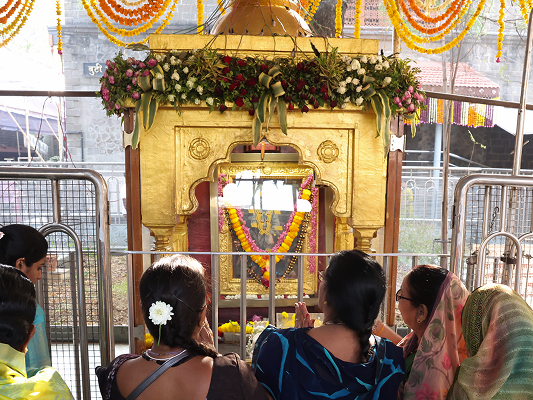
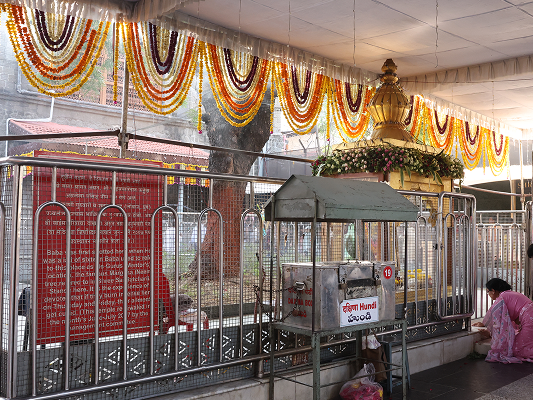
The ancient neem tree at Gurusthan holds a unique place in the spiritual landscape of Shirdi. It was beneath this very tree that Shri Sai Baba was first seen as a young ascetic. Devotees who observed him were struck by his absolute stillness and the depth of his meditative absorption. Even in those early years, his presence beneath the neem tree drew people of all backgrounds who felt an inexplicable spiritual peace simply by coming near.
One of the remarkable traditions associated with this neem tree is that its leaves are said to be free of bitterness. Neem leaves are ordinarily intensely bitter; devotees and those who have tested the leaves of this particular tree report that they are sweet, or at least free of the characteristic bitterness of neem. This is taken by devotees as a sign of the transformative spiritual grace that Baba embodied.
Performing pradakshina (circumambulation) of the neem tree at Gurusthan is considered a devotional act of great merit. Devotees perform pradakshina around the tree with reverence and prayer, honouring the memory of Baba's presence here. The tree remains today as a living link to the earliest days of Baba's life in Shirdi, standing at the exact spot where his sacred story began.
Padukas and Shivalinga test
Sacred objects installed at Gurusthan in devotion and reverence
The Padukas
A pair of marble Padukas (sacred sandals representing the feet of the Guru) are installed at Gurusthan. The installation of these Padukas came about through the initiative of Shri G. K. Dixit and Dr. Ramrao Kothare, both ardent devotees of Baba. It was the sage Upasani Baba who suggested that Padukas be installed at this sacred spot to mark and preserve the spiritual significance of Gurusthan as Baba's place of the Guru.
The Padukas were carved from fine marble and bear Sanskrit inscriptions honouring the Guru. They were formally installed at Gurusthan and consecrated through appropriate rites. Devotees offer flowers, incense, and prayers before the Padukas as an act of devotion towards Baba and the sacred Guru tradition he embodied.
Installation at Gurusthan test
The Sanskrit verse inscribed on the Padukas reads, in essence, that the Guru's sacred feet are the source of all spiritual blessings and liberation. The installation ceremony was attended by devotees from Shirdi and surrounding areas, and the event was considered a significant moment in the formal preservation and honoring of Gurusthan as a place of pilgrimage and devotion.
The Shivalinga test
A Shivalinga is also present at Gurusthan, installed by Megha Sham, a deeply devoted brahmin who served Baba with great sincerity. Megha was devoted to Lord Shiva and would perform Shiva's rituals daily. Baba, recognising Megha's devotion and not wishing to disturb his bhakti, encouraged him and even playfully participated in his worship.
Baba's relationship with the Shivalinga at Gurusthan reflects his characteristic inclusiveness. He honoured the sacred symbols of all traditions. The Shivalinga at Gurusthan thus stands not merely as a symbol of Shiva but as an expression of Baba's embrace of all spiritual paths and his own identity as the one from whom all blessings flow.
Worship at Gurusthan test
Thursdays and Fridays
Thursdays and Fridays are considered particularly auspicious for worship at Gurusthan. Thursday is sacred to the Guru tradition in Hindu practice, while Friday holds special significance in Islamic devotion. Baba — who embodied both traditions — is especially remembered on both these days, and devotees gather in larger numbers to offer prayers.
Incense and Dhuni
The offering of incense at Gurusthan is a continuous devotional practice. A small dhuni (sacred fire) is maintained at Gurusthan, in keeping with Baba's tradition of tending fire as a form of spiritual practice and purification. The smoke of incense and the warmth of the sacred fire are considered to carry the prayers of devotees to the divine.
Devotees perform pradakshina around the sacred neem tree, an act of deep reverence that connects them physically and spiritually with the ground that Baba himself consecrated by his presence. Many devotees also simply sit beneath the neem tree in silent meditation, following the example of Baba himself who sat here in deep absorption for hours at a time.
Sitting beneath the neem tree at Gurusthan is believed to bestow spiritual peace and to bring the devotee into the presence of Baba's grace. Generations of pilgrims have reported a quality of profound stillness at this spot that is rarely found elsewhere.
Takia test
Baba's resting place for fakirs, opposite Gurusthan
Directly opposite Gurusthan stood the Takia — a traditional resting place for wandering fakirs and spiritual mendicants. The Takia served as an open shelter where those on the spiritual path could rest, find food, and be in the company of fellow seekers. It was an important institution in the village life of Shirdi and a place that Baba was closely associated with.
Baba himself would spend time at the Takia, resting there and welcoming the fakirs who came through Shirdi. He was known for his deep love of devotional music and would sometimes spend long evenings at the Takia listening to or participating in qawwali (devotional singing) and other forms of bhajan. His love of spiritual music was not a casual interest but a deeply held devotional expression; he is said to have become absorbed in the music and to have experienced states of deep devotional bliss during these sessions.
Baba also loved devotional dance performed in a spirit of surrender and joy. The atmosphere at the Takia on such evenings would become charged with spiritual energy, and devotees who witnessed these gatherings recalled them as experiences of extraordinary grace.
The original structure of the Takia no longer exists. The physical building was not preserved, but its memory and the significance of its location remain part of the sacred geography of Shirdi. Knowing that Baba rested and celebrated devotional music here is enough to make the site spiritually meaningful to those who come to Gurusthan.