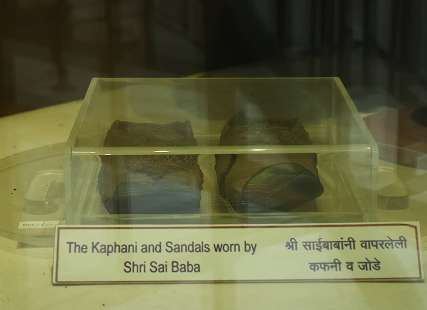
Padukas (Sandals)
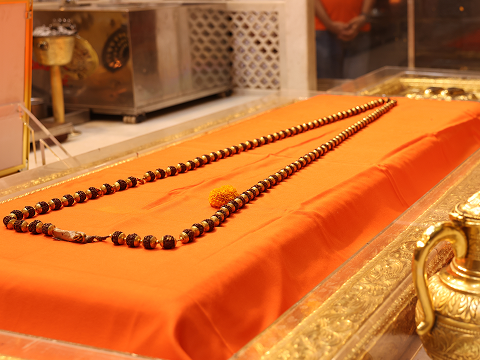
Baba's personal sandals, worn by him during his time in Shirdi. They are venerated as a symbol of the Guru's sacred feet.
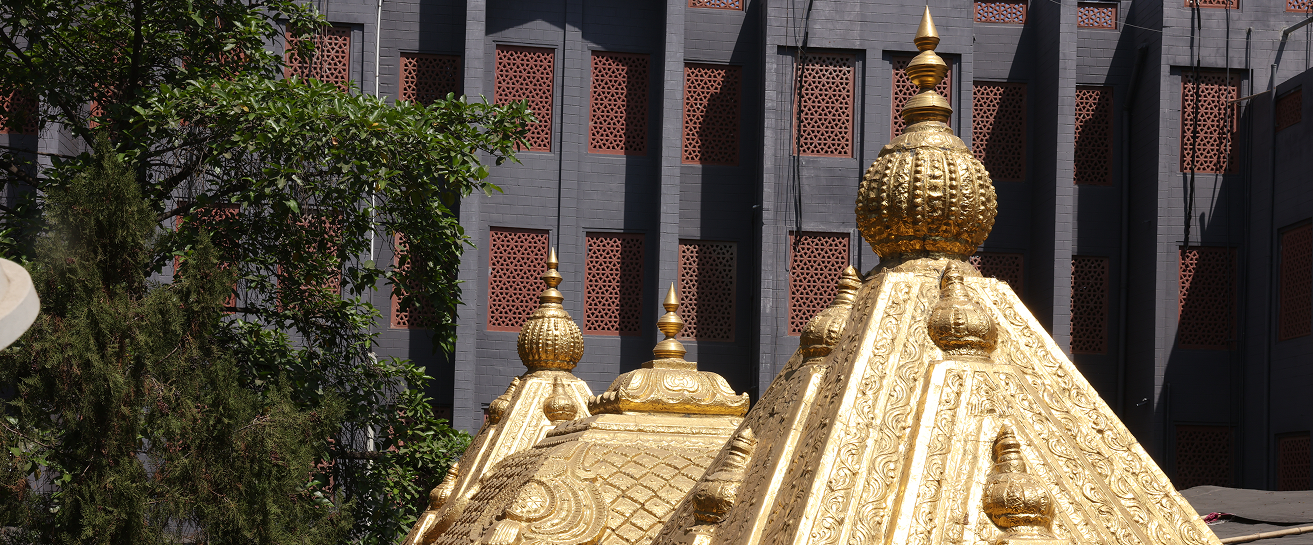
The sacred seat of the Guru — where Baba first appeared beneath the ancient neem tree
Millions come to be in the presence of Baba's Samadhi
The Samadhi Mandir is the holiest site in Shirdi — the marble-encased tomb of Shri Sai Baba, now enshrined within a grand mandir complex. Millions of devotees from across India and the world travel to Shirdi each year for the sole purpose of having darshan of Baba's Samadhi and standing in the presence that continues to radiate from this sacred spot.
Devotees offer flowers, garlands, coconuts, incense, and heartfelt prayer before the Samadhi. The atmosphere inside the Mandir during peak hours of darshan is one of intense devotion — the sound of prayers, the fragrance of flowers and incense, the sight of thousands of people united in their love for Baba. Yet even amidst this intensity, those who stand before the Samadhi often report a quality of deep inner stillness, as though Baba himself is present and quieting the mind.
Baba promised his devotees that he would be active from his tomb — answering prayers, guiding seekers, and granting blessings just as he had during his physical lifetime. The continuing power of Shirdi as a place of healing, transformation, and grace is seen by devotees as the living fulfilment of this promise.
The story of Booty Wada and the fulfilment of Baba's prophecy
The Samadhi Mandir stands today on land that was once cultivated by Baba himself. This ground, which Baba tended with his own hands, was later chosen as the site for a grand Wada (residential building) to be constructed by Shrimant Gopalrao Gund Booty, a wealthy devotee and businessman from Nagpur.
Gopalrao Booty had a dream in which he was instructed to build a Wada with a garden in Shirdi. He approached Shama (Madhav Rao Deshpande), one of Baba's closest devotees, for guidance. Shama brought the matter before Baba, who not only approved of the plan but suggested that a temple for Murlidhar (a form of Krishna) be built within it. Baba even indicated that he himself would reside in the completed building.
Construction began around 1915–1916, and Booty invested heavily in the project. As the building neared completion, discussions continued about the installation of a Murlidhar deity in the shrine room. However, before the Murlidhar statue could be formally installed, events took a completely unforeseen turn.
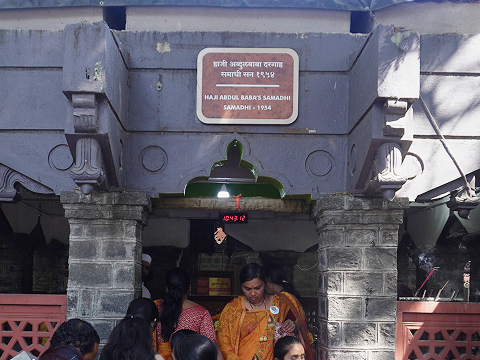
In October 1918, Baba's health had been failing for some months. On Vijayadasami (15 October 1918), Baba gave away all the money he had and distributed his few possessions. In his final moments he dictated his last words to Laxmibai Shinde, asking her to look after the poor. He then rested his head on the lap of a devotee named Bayajabai and breathed his last.
The question of where Baba's body should be interred became an immediate matter of great debate. Baba's Muslim followers wished for burial in an open ground according to Islamic rites. His Hindu devotees wished for interment within Booty Wada, which they now saw as the very building Baba had prophesied he would inhabit. After much deliberation, it was finally decided that Baba's body would be placed in the Wada — thus fulfilling, in a manner that none had anticipated, Baba's own prophecy that he would reside there.
15 October 1918 — Vijayadasami
Shri Sai Baba attained Mahasamadhi on 15 October 1918, on the auspicious day of Vijayadasami. In the days preceding his departure, he showed clear signs that he was preparing to leave the body. He gave away money and possessions and seemed to be taking leave of the physical world.
On the final morning, Baba sat up, gave a few coins to a devotee, and rested his head against the shoulder of one of his close attendants. In this posture, without struggle or pain, he breathed his last. The news spread through Shirdi with the force of an earthquake, drawing thousands of devotees to the spot in grief and disbelief.
Baba's body was placed in the shrine room of Booty Wada, which from that moment became the Samadhi Mandir. Articles associated with Baba — including the brick upon which he sat for years in Dwarkamai — were placed within the shrine. The original form of the Samadhi was simple, but over the years the Mandir was expanded and beautified, culminating in the grand marble structure that stands today.
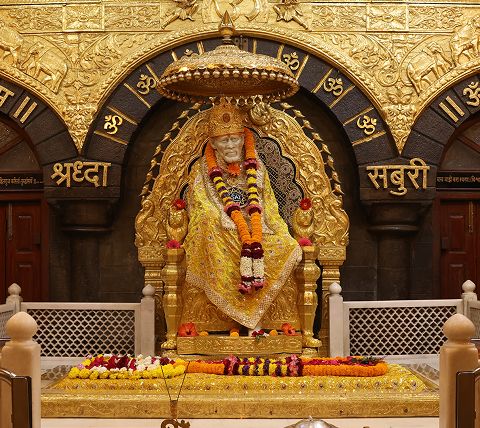
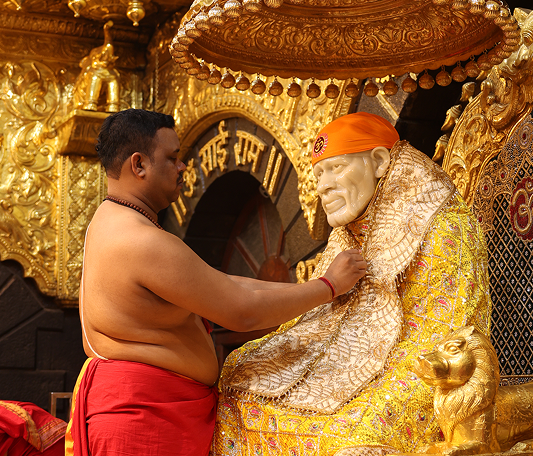
The beloved marble form — darshan of which is the heart of every visit to Shirdi
The beautiful marble statue of Shri Sai Baba that greets devotees in the Samadhi Mandir is one of the most recognisable devotional images in all of India. The statue depicts Baba seated in the posture in which he would rest — right ankle placed on his left knee, hands resting in a gesture of peaceful composure — wearing his characteristic robe and kafni, with his head covered by a cloth cap.
The statue was created by Shri Balaji Vasant Talim, a sculptor from Nagpur. The story of how the marble came to be carved is itself remarkable. A dream came to a devotee indicating the exact form in which Baba wished to be remembered, and Shri Talim worked from this divine inspiration as well as from photographs and the memories of those who had known Baba in life.
The statue was installed in the Samadhi Mandir in 1954 and placed directly above Baba's tomb. It is carved from fine white Italian marble, and its expression — serene, compassionate, and deeply alive — is widely held to be an extraordinarily faithful representation of the quality of presence that those who had known Baba described.
The statue receives the same ritual treatment that Baba himself received in life. It is bathed daily, dressed in fresh clothes, anointed with sandalwood paste, garlanded with flowers, and offered food. These rituals are performed as acts of living devotion — treating the statue not as stone but as the continuing presence of Baba himself.
Personal articles of Shri Sai Baba preserved and displayed in the Mandir
Among the most sacred objects in the Samadhi Mandir are the personal belongings of Shri Sai Baba, which are displayed for devotees to see and venerate. These articles, which Baba used during his physical lifetime, are treated as sacred relics and are a source of profound devotion.
Baba's personal sandals, worn by him during his time in Shirdi. They are venerated as a symbol of the Guru's sacred feet.
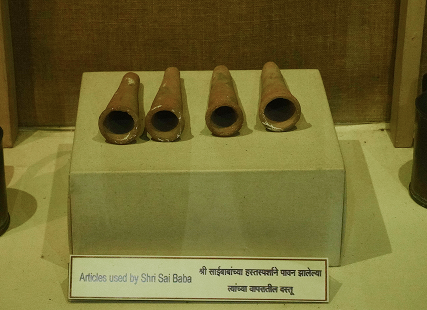
The clay pipes through which Baba smoked tobacco. He would use smoking as a devotional act and would sometimes share his chillim with devotees.
A short wooden stick used by Baba. He was rarely without it and it became one of his most characteristic symbols.
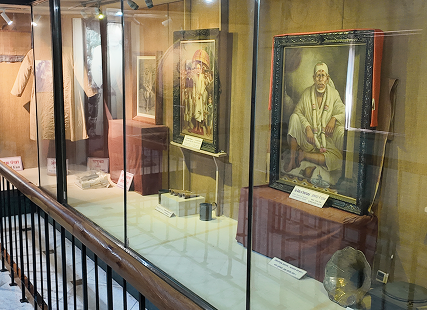
Ornaments belonging to Shyam Sunder, the horse that was part of Baba's world in Shirdi.
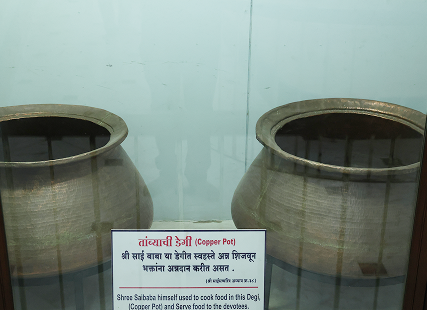
The vessels Baba used to prepare food. He would cook large quantities of food at Dwarkamai and distribute it to all who came.
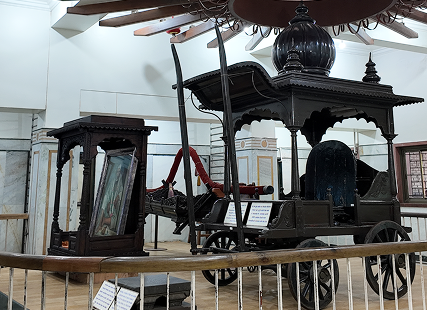
The palanquin in which Baba was carried in the Chavadi procession on Thursday evenings.
The devotional rite of light — offered five times daily at Samadhi Mandir and Dwarkamai
Arati — the offering of light, flowers, incense, and song before the divine — is the central devotional rite at the Samadhi Mandir. It is performed five times daily, and each Arati draws a great gathering of devotees. The Arati songs sung at Shirdi are among the most beloved devotional compositions associated with Baba, and the experience of being present during Arati at the Samadhi Mandir is considered one of the most profound spiritual experiences that Shirdi offers.
The tradition of Arati began during Baba's own lifetime, first at Dwarkamai and later extended to Chavadi. After his Mahasamadhi, Arati was established as a formal daily rite at the Samadhi Mandir. The five Aratis performed each day mark the rhythm of devotional life in Shirdi: from before dawn until late at night, the Mandir pulses with the sound of prayer, music, and the fragrance of offerings.
The Arati songs — including the Kakad Arati sung at dawn and the Sej Arati sung at night — are attributed to devotees from Baba's own time and have been sung continuously since then. They describe Baba's divine attributes, recall his miracles and compassion, and express the devotee's longing for his grace. During Arati, the hall fills with the sound of bells, conches, and voices united in song, creating an atmosphere of intense collective devotion.
Arati Schedule
Timings may vary slightly on festival days. Please confirm current timings with the Sansthan.
